Call to Order 1-765-258-4024


Original RPR Concave®
CM Welding, Donnie Estes, developed the RPR Concave System™ in 2012 and Rotor Loss Kit™ and Disruptors™ prior, serving thousands farmers with combine parts, all of which proudly Made In USA.
Call 765-258-4024

$5750
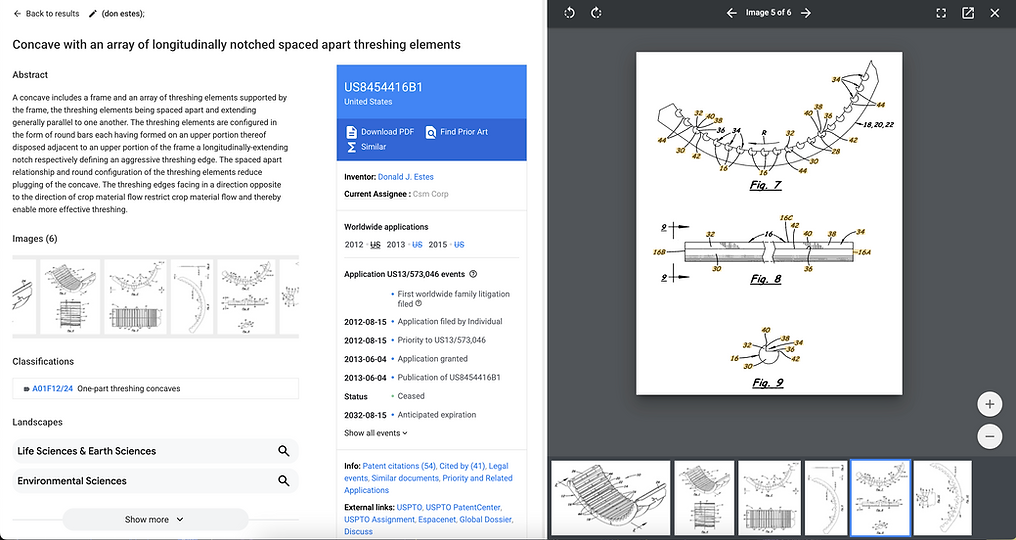
RPR Concaves® Patented in 2013
U.S. Patent No. 8,454,416
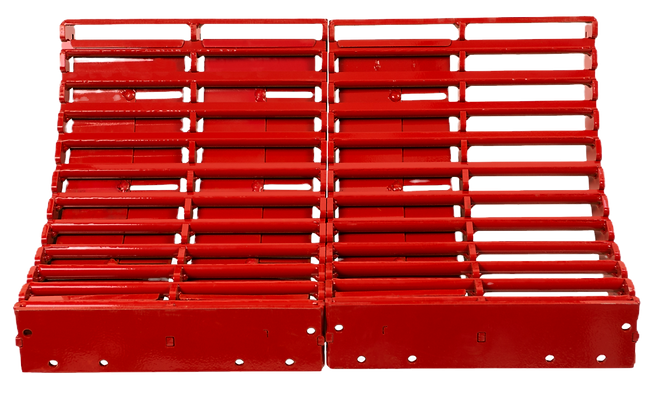
RPR Concaves®·
Stop Rotor Loss ·
More Capacity

The Original
RPR
SINCE 2012
Call 1-765-258-4024 to order today!
$4300
®
R
Restricted Flow
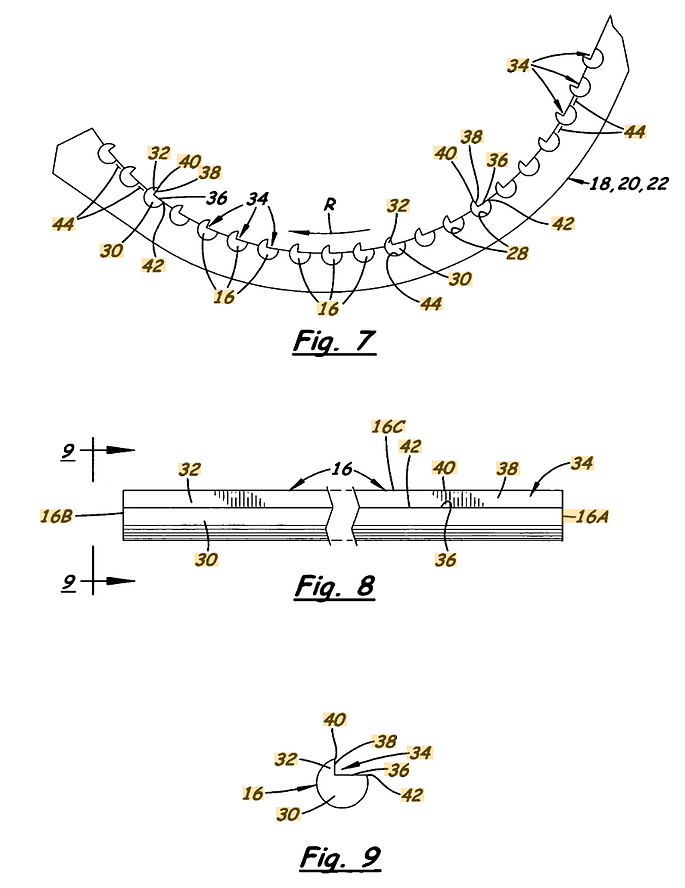
The "PacMan" notch deliberately restricts crop flow to promote effective grain-on-grain threshing.
P
R
Progressively Open
Progressively open physical bar spacing allows more crop material to pass through the concaves sooner, reducing the load carried into the following separator section and supporting greater capacity. Because machines overload differently, bar spacing is progressively varied to manage crop flow and reduce downstream overload.
Round Bar
The 90-degree milled, longitudinally notched round-bar design promotes effective threshing while helping resist plugging across changing crop conditions.
Featured on RFD-TV’s American Farmer
RPR Concaves™ were featured in a series of RFD-TV’s American Farmer programs beginning in 2013.
In four American Farmer programs, Don Estes discusses the development and operating rationale of the RPR Concave System. He begins with the principal problem the system was designed to address: when a conventional concave does not allow enough crop material to pass through during threshing, more material remains in the rotor path and is carried into the downstream separation section. As that section becomes overloaded, grain may be carried through the rotor and discharged from the rear of the combine instead of being recovered—a condition commonly referred to as rotor loss.
Don explains that the RPR system addresses this problem through two cooperating features: its restricted-flow, longitudinally notched round bars and its progressively open physical bar spacing.
The restricted-flow notch is designed to momentarily restrict crop movement at the bar, promoting more effective threshing and grain-on-grain action. At the same time, the bars are positioned progressively open, meaning the physical spacing between adjacent bars deliberately becomes wider around the concave from where the crop enters toward where it exits. This is different from rotor-to-concave clearance, cover plates, or a general statement that the concave has more open area.
In the 2014 American Farmer program, Don describes the historical RPR arrangement as progressing from approximately 7/8-inch spacing to approximately 1 1/8-inch spacing. He explains:
“Our bars are placed progressively open from where the crop comes in to where the crop leaves the concaves.”
As the crop is threshed, the progressively wider openings are intended to allow more separated crop material to pass downward through the concaves sooner. That earlier discharge places less material into the later rotor and separator regions, reducing the amount of work the downstream separation system must perform.
The same operating relationship is explained repeatedly across the programs:
-
In the 2013 program, Don explains that removing more crop in the concave places more material onto the front augers and leaves less material to be separated at the rear.
-
In the 2014 program, he identifies insufficient concave opening as a cause of separator overload and explains the progressively open spacing, its direction, approximate dimensions, and earlier-unloading purpose.
-
In the 2016 program, he summarizes the principle by explaining that when crop is threshed quickly, it must also be removed quickly—and identifies that need as the reason for progressively open bars.
-
In the 2017 program, he again states that progressively open bar placement was used as a way to remove crop sooner.
This explanation is also consistent with the historical patent record. U.S. Patent No. 8,454,416, issued June 4, 2013, describes spaces between adjacent concave bars becoming progressively wider for the stated purpose of helping remove crop material sooner and avoiding overload of the following separator section.
Together, the patent, agricultural publications, and American Farmer programs document a consistent operating principle: thresh the crop effectively, allow separated material to leave the rotor path earlier, and reduce the volume of material carried into the downstream separation section.
Don connects this earlier crop discharge and reduced downstream load with the RPR system’s stated objective of reducing rotor loss. The programs and historical customer accounts also discuss operating benefits such as improved threshing, cleaner grain samples, and increased harvesting capacity under appropriate conditions.
These descriptions explain the historical design rationale and reported operation of the RPR system. They are not guarantees of a particular result. Actual performance varies with crop type, moisture, yield, machine configuration, concave and rotor settings, throughput, maintenance, field conditions, and operator practices.
Selected Program Passages
American Farmer 2013 — Vimeo No. 102133522
-
04:14–05:08 — Insufficient concave opening, downstream separator load, and rotor loss
-
05:23–05:42 — More crop discharged onto the front augers and less material carried rearward
-
05:58–06:42 — Progressive physical bar placement and earlier crop removal
American Farmer 2014 — Vimeo No. 138202443
-
00:24–00:44 — Insufficient opening and separator overload
-
01:18–01:31 — Earlier downward movement of crop material
-
01:50–01:58 — Meaning of “progressively open”
-
02:42–03:36 — Direction, approximate spacing, earlier crop passage, and overload avoidance
-
11:24–11:38 — Earlier discharge and the stated rotor-loss rationale
American Farmer 2016 — Vimeo No. 176818053
-
02:50–03:31 — Crop threshed quickly must also be removed quickly
-
03:51–04:07 — Rotor-loss reduction identified as the system’s principal objective
American Farmer 2017 — Vimeo No. 250502489
-
00:50–01:19 — Earlier crop discharge and reduced separator load
-
02:08–02:24 — Bar placement, restricted-flow notch, and early separation
-
03:58–04:07 — Progressive bar placement used to remove crop sooner
Timestamps are provided for convenience. Visitors should watch the recordings for the complete statements and context.
![CM Welding - American Farmer 2013 [102133522]](https://static.wixstatic.com/media/b454ea_e58e7cabb3d546c4a9f1602e77942099f002.jpg/v1/fill/w_2880,h_1620,enc_auto/file.jpeg)
CM Welding - American Farmer 2013 [102133522]
![CM Welding - American Farmer 2014 [138202443]](https://static.wixstatic.com/media/b454ea_e248f45399fe4621ab91bbc51dada0dff002.jpg/v1/fill/w_2880,h_1620,enc_auto/file.jpeg)
CM Welding - American Farmer 2014 [138202443]
![American Farmer: CM Welding - 2016 [176818053]](https://static.wixstatic.com/media/b454ea_d04b8b10bddb4bb4bb2aaf6cfebbf796f002.jpg/v1/fill/w_2880,h_1620,enc_auto/file.jpeg)
American Farmer: CM Welding - 2016 [176818053]
![American Farmer: CM Welding 2017 [250502489]](https://static.wixstatic.com/media/b454ea_32da5f81f9514aabaab943ebff91bd02f002.jpg/v1/fill/w_2880,h_1620,enc_auto/file.jpeg)
American Farmer: CM Welding 2017 [250502489]

Increase Yields by Eliminating Rotor Loss!

Designed to Reduce Rotor Loss
Rotor loss has challenged rotary combines since their introduction. It can occur when insufficient threshed material passes through the concaves early enough, causing excess crop to be carried into later rotor and separation regions. As those regions become overloaded, grain may remain with the residue and be discharged from the rear of the combine. RPR Concaves® use progressively open physical bar spacing to allow more crop material to pass through the concaves sooner, reducing the load carried into the following separator section and helping reduce rotor loss while supporting combine capacity.

Restricted-Flow "PacMan" Bar
Round-bar concaves have been used in combines for decades. RPR Concaves™ incorporate a 90-degree milled, longitudinally notched round bar—known as the PacMan™ bar and disclosed in U.S. Patent No. 8,454,416. Used throughout the RPR system, the notch deliberately restricts crop flow to increase threshing engagement and promote effective grain-on-grain threshing. The notch is one element of the broader RPR design, which also includes the concave geometry, bar arrangement, progressively open spacing, and overall crop-flow configuration.

More Capacity
RPR Concaves® use progressively open physical bar spacing to allow more crop material to pass through the concaves sooner. This reduces the amount of material carried into the following separator section, helps reduce downstream loading and the risk of overload, and supports greater combine capacity. In specified CM Welding comparisons with applicable stock round-bar concaves, the RPR system allowed up to 68% more crop material to pass through the concaves. Each combine make and model experiences downstream overloading differently, and RPR’s progressive bar spacing is designed to help minimize downstream overloading.

Serving Farmers Since 2009
Since 2009, CM Welding has supplied Disrupters and Rotor Bars for John Deere and Case IH combines. In 2012, CM Welding introduced RPR Concaves™, a purpose-built threshing and separating system engineered to promote grain-on-grain threshing, improve grain quality, reduce downstream overload, and reduce rotor loss—helping farmers keep more of what they harvest.
Cleaner Grain Sample
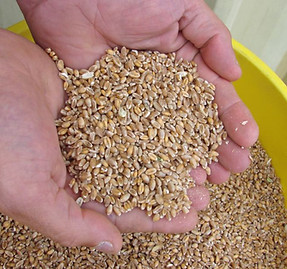
RPR Concaves® use a 90-degree milled, longitudinally notched round bar—known as the PacMan™ bar and disclosed in U.S. Patent No. 8,454,416—to restrict crop flow and promote grain-on-grain threshing. The restricted-flow notch is designed to support efficient threshing, a cleaner grain sample, and reduced grain damage. RPR systems are manufactured in model-specific fitments for compatibility with the listed combines. Actual results vary with crop type, moisture, yield, machine configuration, throughput, operator settings, and operating conditions.
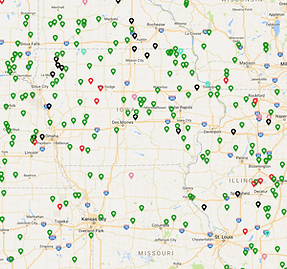
3,000 Customers & Counting
We have customers from all over the world and more than likely there is someone near you running our products. Call us, we can get you connected to one of our many happy customers.